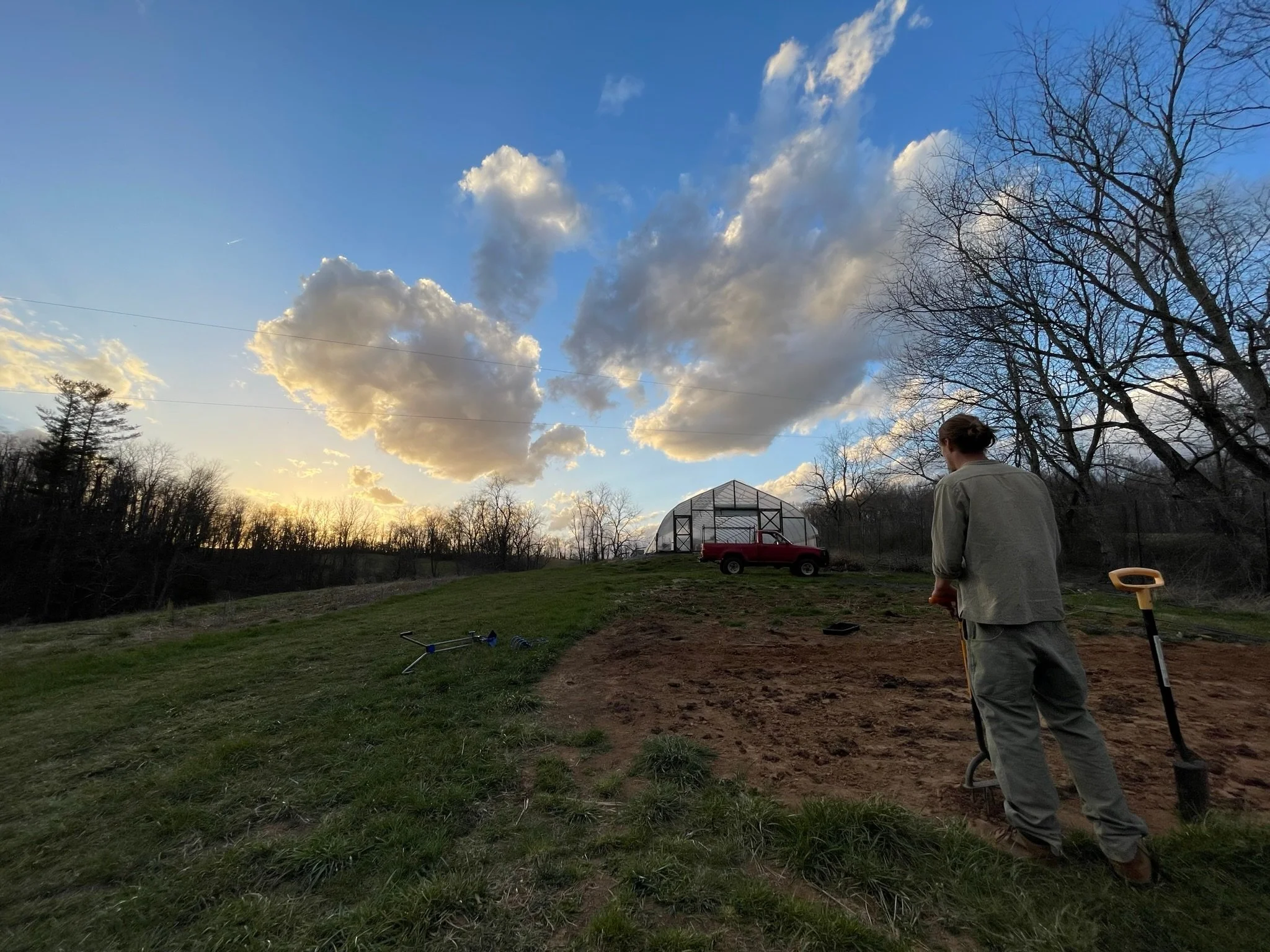
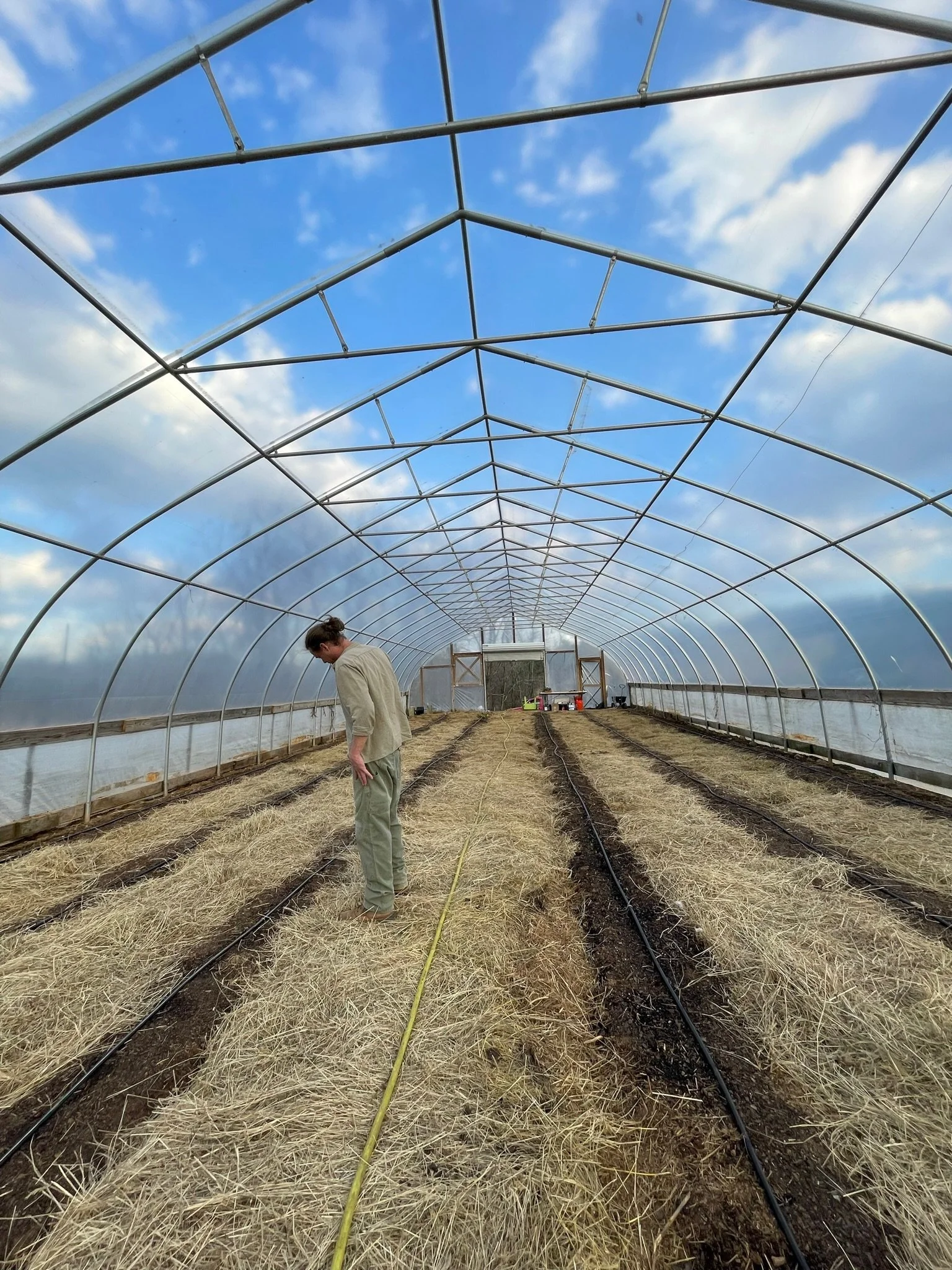
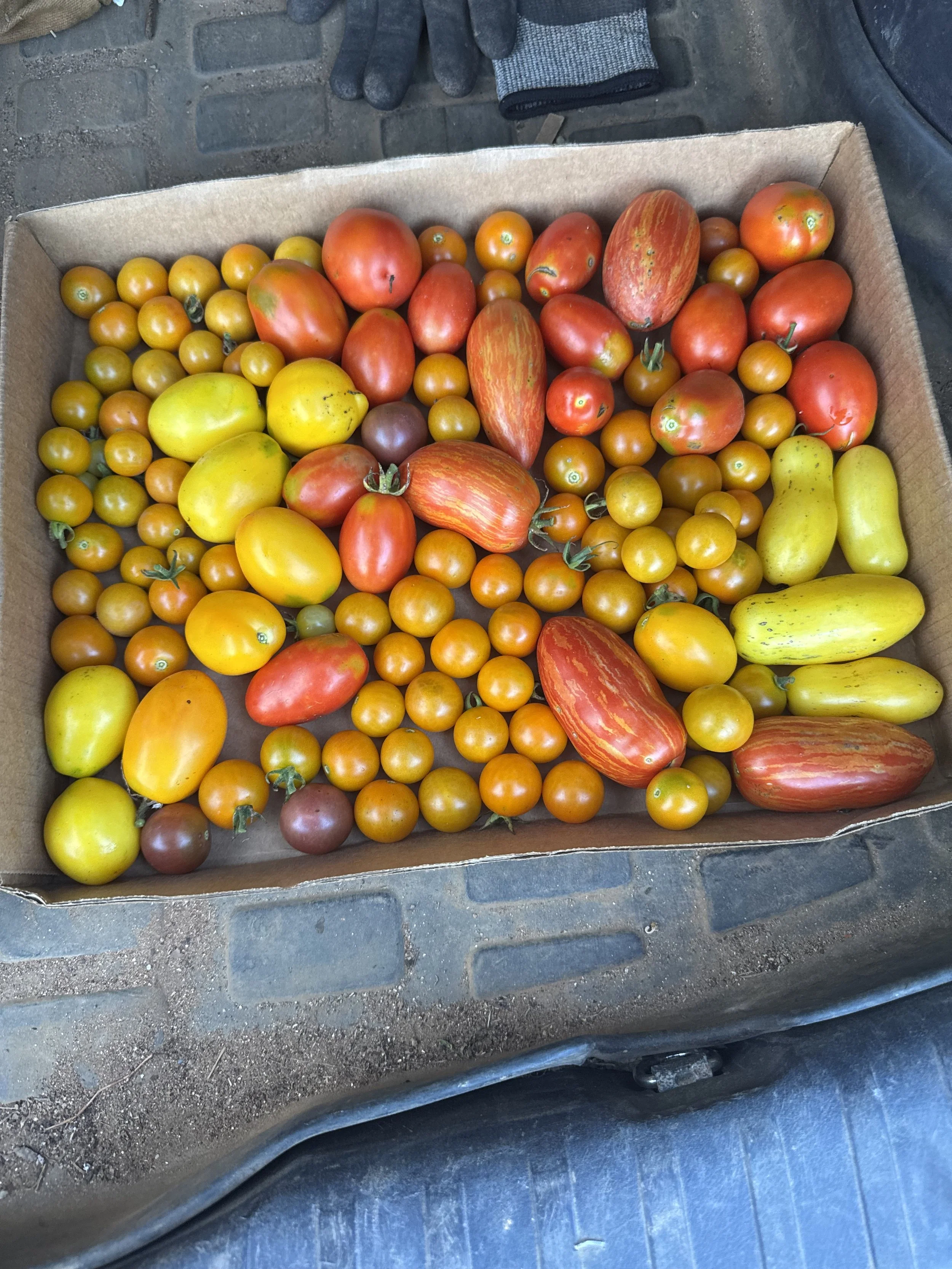
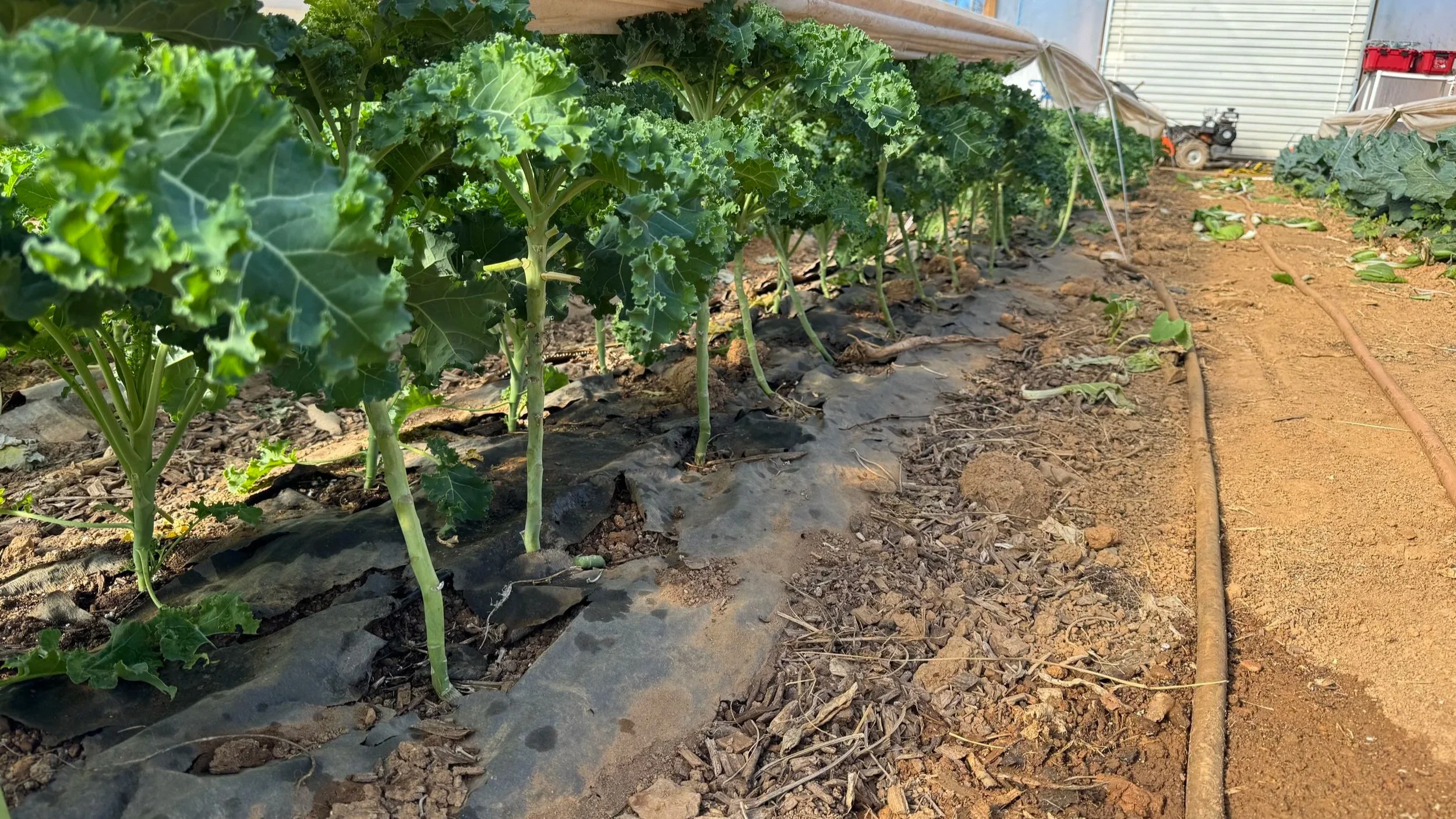
This work began as a small, privately supported effort to grow food on a small piece of land here in Floyd, Virginia, with the simple goal of producing as much as possible to be shared freely with those who needed it.
Over time, as both the capacity of the system and the need within the community became clearer, that work transitioned into a public effort through the formation of the Soil & Sustenance Foundation - a nonprofit organization created to continue and expand that work with greater consistency and reach.
—
At its core, this project operates with two closely linked goals.
The first is immediate: to grow and distribute fresh, nutrient-dense food directly to people within the community who benefit from that support.
The second is long-term: to develop systems of food production that are rooted in the conditions of the land, capable of sustaining themselves over time, and increasingly accessible to others
—
Our work focuses on building these systems in a way that is both practical and grounded. This includes intensive annual vegetable production to meet current needs, alongside the development of perennial plant systems that provide long-term stability and reduce the need for continuous input.
Each season, these two layers work together, one providing immediate output, the other building the conditions that make that output more resilient and sustainable.
This approach is guided by the understanding that food insecurity is not only a problem of supply, but of access to the means of production.
By developing systems that are efficient, adaptable, and born in real conditions and by sharing how those systems function, this work aims to increase people’s ability to participate in their own food production.
—
The organization is intentionally structured to remain simple and focused. Resources are directed primarily toward production, distribution, and system development, with oversight provided by a small board to ensure accountability and long-term alignment with the mission
—
This project functions as both a working farm and a reference point—a place where these systems are actively developed, refined, and demonstrated in practice.
The goal is not only to grow food here, but to contribute to a broader shift toward more stable, accessible, and locally rooted food systems
—